|

Adrian Chavez
M.S. Student
Entomology
Adrian is a second-year master’s student in the AVE Lab. Originally from Loja, Ecuador, he joined EREC in the spring of 2025. He received his bachelor’s degree in Agricultural Engineering from the Universidad Nacional de Loja. His current research focuses on studying a newly identified thrips species in Florida that is affecting pepper and other vegetable crops, under the supervision of Dr. De-Fen Mou and Dr. Julien Beuzelin.
|
Berson Valcin
Ph.D. Student
Soil, Water, & Ecosystem Sciences
Berson J. Valcin is a Ph.D. student in the Soil, Water, and Ecosystem Sciences Department at the University of Florida. He is originally from Haiti and holds a bachelor’s degree in Agricultural Sciences and Natural Resources Management from EARTH University in Costa Rica. He earned his master’s degree in Plant and Soil Science from Tuskegee University, Alabama, with a focus on Soil Fertility.
His current research focuses on the development and evaluation of engineered phosphorus removal and capture technologies to improve surface water quality, as well as strategies to enhance phosphorus retention in soils with low phosphorus-retention capacity. He is currently working under the supervision of Dr. Jehangir Bhadha in the Soil, Water, and Nutrient Management Laboratory.
|
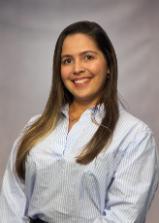
Carolina Tieppo Camarozano
Ph.D. Student
Entomology
Carolina Tieppo Camarozano is a Ph.D. student at the Everglades Research and Educational Center at the University of Florida. Originally from Brazil, she received her bachelor's degree in Biological Sciences from the University of São Paulo. During which she had the opportunity to come to EREC in an internship program (2019) with Dr. Julien Beuzelin, to work with corn silk flies. She kept the interest in working with Insect Pest Management and is now part of the UF Entomology department. Her research is focused on the management of the rice stink bugs complex, in the aim to find better solutions for growers, and on the study of their natural enemies in the Everglades Agricultural Area.
|
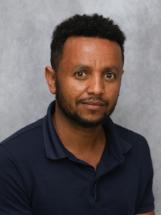
Getachew Kefelegn
Ph.D. Student
Agronomy
Getachew is originally from Ethiopia. He holds a Bachelor of Science in Plant Sciences and Protection from Debre Berhan University and a master’s degree in Horticulture from Haramaya University. Getachew has worked as a lecturer at Debre Berhan University and Mada Walabu University in Ethiopia. Additionally, an experienced researcher for two international NGOs: Bridges to Prosperity and One Acre Fund. During his Master’s program, thesis focused on determining optimal plant spacing and nitrogen-phosphorus (NP) fertilizer levels for onion seed production. Currently, he is pursuing a Ph.D. with research that centers on evaluating drone technology to assess crop nutritional status and develop predictive models. Getachew will also investigate nutrient dynamics in the organic muck soils of the Everglades Agricultural Area (EAA).
|
 Hima Varsha Madala Hima Varsha Madala
Ph.D. Student
Agronomy
Hima is from India and her master's degree is from the University of Florida. She is currently in her second year of her Ph.D. Program working with the sugarcane crop and has current dissertation topic "Identifying Quantitative Trait Loci and Developing Molecular Markers for Tillering and Ratooning Traits in Sugarcane Crop".
|

Jairo Arcos Jaramillo
Ph.D. Student
Horticultural Sciences
Jairo Arcos is PhD student of Plant Breeding program originally from Colombia. He received his Bachelor of Agriculture Engineering at the Universidad Nacional de Colombia and a master’s degree in Biotechnological Sciences from ICESI University in Colombia. As part of his PhD, Jairo will be working on plant breeding of lettuce, improving phosphorus use efficiency (PUE) under the supervision of Dr. German Sandoya.
|
Juan Sebastian Angel-Salazar
Ph.D. Student
Entomology
Juan is a Ph.D. student in the Department of Entomology and Nematology at the University of Florida's Everglades Research and Education Center. He holds a bachelor's and master's degree in Agricultural Sciences from the National University of Colombia, specializing in Crop Protection. His research focuses on developing integrated pest management programs and fostering agricultural and biological research that contributes to sustainable farming practices. Under the supervision of Dr. De-Fen Mou, his doctoral research aims to improve aphid management in sugarcane by studying species composition, population dynamics, varietal interactions, and biological control methods within the agroecosystem. His goal is to reduce dependence on chemical controls, lower production costs, mitigate resistance issues, and minimize environmental impact.
|
Kelvin Aloryi
Ph.D. Student
Horticultural Sciences
|
Lidysce Andrea Mata Cantarero
M.S. Student
Horticultural Sciences
|
-170x215.jpg)
MD Anik Mahmud
Ph.D. Student
Soil and Water Sciences
MD Anik Mahmud is a Ph.D. student in the Soil, Water, and Ecosystem Sciences Department at the University of Florida. Anik is working on legacy-P chemistry, bioavailability, and capture under Dr. Jehangir Bhadha (Advisor) and Dr. Jonathan Judy’s (Co-advisor) supervision. To understand legacy-P chemistry and bioavailability, he is working on three types of soils (e.g., acidic, organic, and calcareous). For research, Anik uses advanced analytical machines, such as ICP-OES, NMR, and XANES. Before joining this program, he earned MSc. in IPSS from the University of Kentucky, where he worked on selenium oxyanion removal using passive anaerobic bioreactors. Anik also earned BSc. in the Soil, Water, and Environment Department at the University of Dhaka, Bangladesh.
|

Shakil Uddin
Ph.D. Student
Soil, Water, & Ecosystem Sciences
Md Shakil Uddin is a PhD student in the Department of Soil, Water, and Ecosystem Sciences at the University of Florida. He is originally from Bangladesh, where he earned his BSc in Agriculture and MS in Agricultural Chemistry from Bangladesh Agricultural University. Shakil's PhD integrates soil chemistry, microbiology, and data driven modeling to address challenges related to phosphorus availability and use efficiency in agricultural systems in Florida. His work includes evaluating the use of commercial biofertilizers to enhance phosphorus use efficiency in sweetcorn production on organic soils, investigating the potential of chelators and siderophores to mobilize phosphorus in sandy Spodosols, and applying modeling approaches to unravel the complex dynamics of soil phosphorus availability in sugarcane and rice cropping systems of the Everglades Agricultural Area. Through this multidisciplinary approach, Shakil aims to develop sustainable phosphorus management strategies that optimize crop productivity while minimizing environmental impacts from phosphorus losses to surrounding water bodies. |
Shalom Sapkota
PhD Student
Soil, Water, & Ecosystem Sciences
Shalom Sapkota is from Nepal and holds an M.Sc. in Environmental Science from Tribhuvan University. He has an academic and research background in water quality assessment, nutrient analysis, land management, and soil and watershed conservation. He is currently a PhD student in the Department of Soil, Water, and Ecosystem Sciences at the University of Florida, with a concentration in hydrology and soil sciences. His doctoral research focuses on soil conservation, with particular emphasis on soil health, carbon stability, and nutrient loss mitigation to support sustainable and resilient agriculture in the Everglades Agricultural Area.
|
|

Suraj Melkani
Ph.D. Student
Soil, Water, & Ecosystem Sciences
Suraj Melkani is a Ph.D. student, originally from India. He received his master's degree from G.B. Pant University of Agriculture and technology in Pantnagar, India. Currently, he is engaged in a research project that focuses on determining soil carbon stocks and stability in the Everglades agricultural area. This project employs an integrated approach utilizing data-driven machine learning models and spectroscopy techniques. Additionally, Suraj is involved in simulating the impact of various management practices on carbon dynamics and CO2 emissions. This simulation work is carried out using the crop simulation model DSSAT.
|
Tarciso Almeida Ferreira Junior
PhD. Student
Plant Pathology
Tarciso earned his bachelor's degree in Agronomy from the Federal University of Viçosa, Brazil. During his undergraduate studies, he completed an internship at the EREC in Dr. Katia Xavier’s lab, where he worked on soilborne pathogens affecting sugarcane and leafy green crops. His current research focuses on the population biology of Cercospora spp. to improve management of early blight in celery, specifically in two areas: developing AI-powered tools to support grower decision-making and studying how Cercospora populations change and spread within Florida’s agroecosystems. Outside the lab, he enjoys reading and spending time outdoors — activities he often combines.
|

Vitor A. Silva de Moura
PhD. Student
Plant Pathology
Vitor, a graduate student originally from Brazil, is currently pursuing his PhD at the University of Florida, at IFAS Everglades REC, where he works with Prof. Katia Xavier. He earned his bachelor's degree in Agronomy at the Federal University of Vicosa in Brazil. Vitor’s current research focuses on investigating tar spot and NCLB (Northern Corn Leaf Blight) diseases on corn in Florida.
|
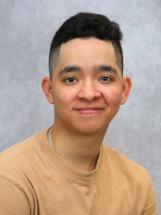
Walter Wong
M.S. Student
Agronomy
Walter Wong is a M.S. student at the Everglades Research and Education Center at the University of Florida, in the Department of Agronomy, majoring in Weed Science. Originally from Panama, he received his B.S. in Agronomy from Zamorano University in 2023. During his undergraduate studies, he participated in an internship at the Weed Science Lab under the supervision of Dr. Calvin Odero, where he gained experience working with various crops and weed management strategies. Walter joined the University of Florida as a graduate student, continuing under the mentorship of Dr. Odero. His research focuses on the integrated management of common purslane (Portulaca oleracea) in lettuce grown on organic (muck) soils in the Everglades Agricultural Area. The aim of his study is to evaluate chemical and cultural strategies that optimize weed control while minimizing crop injury and environmental impact, with special attention to herbicide behavior in high-organic soils and the development of sustainable IWM programs for leafy vegetables.
|
